 Donate

Academic Development of CD19 CAR T cells Therapy for Refractory Autoimmune Diseases
Leaders : Cristina Castilla-Llorente, Camille Bigenwald, Samuel Bitoun, Xavier Mariette
Hematologists, Gustave Roussy Institute
Rheumatologists, Assistance Publique – Hôpitaux de Paris, Bicêtre Hospital
Synopsis
Refractory autoimmune diseases (RAIDs) represent a therapeutic challenge, with limited treatment options. CD19 CAR-T cell immunotherapy, initially developed for hematologic malignancies, is emerging as a promising approach to target B lymphocytes and certain plasma cells. CD19 CAR-T cells can induce treatment-free remission in these severe patients, an outcome unattainable with any other current therapy for these conditions.
Primary Objective
To develop and validate a local manufacturing process for second-generation autologous CD19 CAR-T cells in a closed system and to evaluate their safety and efficacy in the treatment of refractory autoimmune diseases.
Methodology
This study aims to produce at Gustave Roussy, within the Cellular Therapy Unit (Hematology Department, 8th floor), an autologous CD19 CAR-T cell therapy for six (6) patients with refractory autoimmune diseases, including lupus, rheumatoid arthritis, Sjögren’s disease, myositis, and systemic sclerosis.
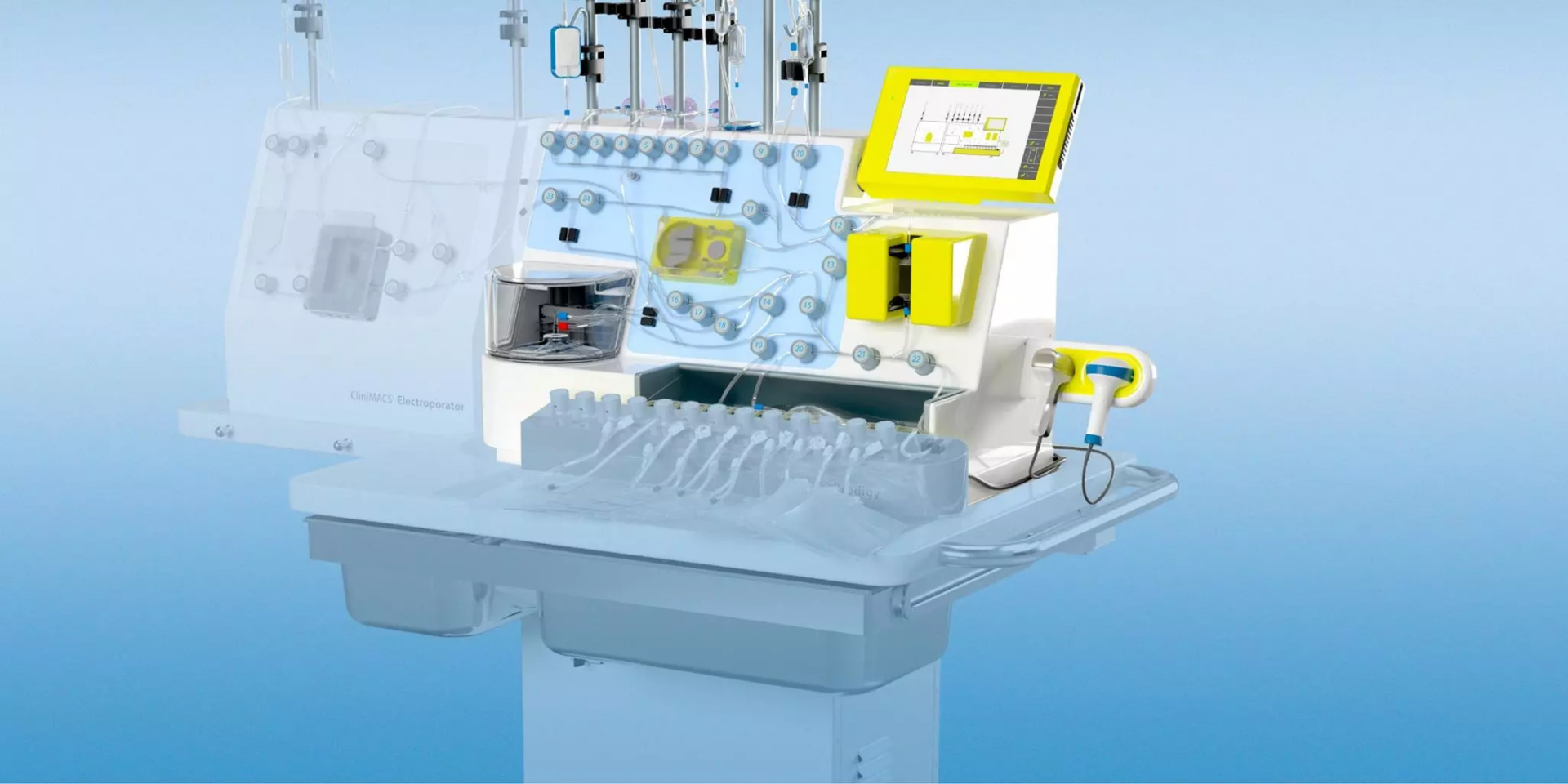
In collaboration with Miltenyi Biotec, the Gustave Roussy team has implemented the Prodigy system, a closed-platform device enabling the production of second-generation CD19 CAR-T cells incorporating the 4-1BB co-stimulatory domain.
The lentiviral vector, provided directly by Miltenyi and already approved by the EMA, simplifies regulatory approval procedures. Initial validation included evaluation of T cell transduction efficiency by flow cytometry and microbiological testing to ensure product sterility, including bacterial and mycoplasma detection, using T cells isolated from healthy individuals.
The team submitted a regulatory dossier to the ANSM to obtain approval for a Phase I clinical trial and Good Manufacturing Practice (GMP) certification.
The six patients will receive a single intravenous infusion of 1×10⁶ CAR-T cells per kilogram of body weight, administered 2 to 5 days after lymphodepleting conditioning with fludarabine at 25 mg/m²/day for 3 days (D-5, -4, -3) and a single dose of cyclophosphamide at 1000 mg/m² on D-3. They will be jointly followed by the hematology team at Gustave Roussy and the Rheumatology team.
The primary safety endpoint will be assessed at 1 month, including cytokine release syndrome, neurologic toxicity, hematologic toxicity, and pseudo-flares in organs previously affected by the autoimmune disease. Efficacy will be evaluated by comparing disease-specific activity scores at 3 and 6 months.
In parallel, blood sampling, tissue biopsies (e.g., salivary glands), and bone marrow aspirates will enable the assessment of B cell dynamics after CAR-T cell infusion.